Skip to content
Triterra Logo
  • About
    • About Triterra
    • Our Team
    • Testimonials
    • Community Outreach
  • Brownfield Development
  • Environmental Consulting
    • Environmental Due Diligence
    • Investigation & Remediation
    • Industrial Hygiene
  • Natural Resources
  • News
  • Contact Us

Sitemap

  • Home
  • About
    • Community Outreach
  • Brownfield Development
  • Environmental Consulting
    • Environmental Due Diligence
    • Investigation & Remediation
    • Industrial Hygiene
  • Natural Resources
  • News
  • Contact
  • Request A Quote
  • Our Team
    • Don McNabb
    • J.P. Buckingham
    • Dave Van Haaren
    • Garnet Johnson
    • Hanna VonAchen
    • Craig S. Mulica
    • Kyle A. Clark
    • Shawn Shadley
    • Mary Napier
    • Melissa Hunter
    • Jade Gillette
    • Meredeth Crane
    • Lucas Groat
    • Adam Bishop
    • Carrie Breckon
    • Madison Konrad
    • Saray Morales
    • Connor Zook
    • Tami Haase
    • Jim Lockwood
    • Mariah Bennett
    • Taylor Twohig
    • Madison DeMuyt
    • Katherine Kay
    • Lillian Badillo
    • Kathleen Christnagel
    • Alexsis Bowen
    • Vince Fountain
    • Brianna Borie
    • Bryan Crandall
    • Casey Heath
    • Jessica Meister
    • Erik Eikey
    • Andrew Kranz
    • Garek Hund
    • Christian Halquist
    • Robert Borie
    • Jake Trudeau
    • Aaron Pitcher
    • Chase Covello
    • Amelia Byle
    • Corbin Pew
    • Connor Slaggert
    • Allison McCurdy
    • Samantha Patrick
    • Erika Reagan
    • Anya Pallas
    • Brooke Ellsworth
    • Ally Phillips
    • Victoria Jackson
    • Hannah Burleson
  • Testimonials
Triterra

1375 S. Washington Avenue
Suite 100
Lansing, MI 48910

Phone: (517) 702-0470

Contact | Sitemap | Login

This site is protected by reCAPTCHA and the Google Privacy Policy and Terms of Service apply.

© 2025 Triterra. All Rights Reserved.
Spearheading Community Revitalization in Michigan: The Promising Future for the Great Lakes State

Over the past two decades of America’s economic and social transformation, Michigan has experienced various crises of a greater magnitude than surrounding US states. The ‘Lost Decade,’ a prolonged recession from 2000 to 2010, followed by the public health disaster of the Flint water crisis, was more than enough to catalyze a below-average quality of life and stunted economic opportunities.

In recent years, the state has been steadily investing in a brighter future for all its residents with programs like the Build MI Community Grant and the Michigan Community Capital partnership, propelled by local changemakers. Well-known across Michigan as a client-centric environmental consulting firm dedicated to building healthier communities through practical and creative solutions, Triterra is reimagining the future of Michigan, from the bustling automotive hub of Detroit to tight-knit towns at the heart of local development. With its sights set on widespread community revitalization, this disruptor is paving the way for vibrancy and efficiency to represent the Great Lakes state.

Besides its rich automotive history as Motor City and a strong heritage in the manufacturing sector, Michigan boasts many notable features that draw in tourists and talent every year. With four Great Lakes enveloped in the state’s unique geography, Michigan is a national capital for stunning coastlines and fisheries. Other gems like the Motown Museum, Mackinac Island, and the National Cherry Festival add more soul to this state’s overflowing charm.

However, ongoing challenges have overshadowed much of this diversity with the bleak reality of several interrelated factors. Rising foreign competition, the wide-reaching consequences of the 2008 financial crisis, and the housing bubble caused Michigan’s thriving automotive sector to retract significantly, leaving countless people experiencing hardship. The state saw employment declines amid a period of national economic growth, causing young professionals to search for more promising economic opportunities outside Michigan. These scars are on the mend, as public and private investment has increased. Still, Michigan remains in the bottom third of US states for personal income, painting an uncertain picture for future generations.

With a local legacy that has been nearing two decades, Triterra has responded to Michigan’s difficult circumstances by investing in people and the existing infrastructure that is ripe for repurposing. Specializing in brownfield development, environmental consulting, and natural resource management services, Triterra’s expertise has been invaluable in prominent community development projects that spurred the creation of affordable housing and other vibrant, functional spaces.


Triterra’s drive to transform and restore Michigan is prompted by its deeply rooted mission to promote safety and prosperity by balancing business objectives with environmental due diligence. This passion was reinforced after the firm split from its former company, reshaping its ethos and team to reflect the responsiveness, collaboration, ingenuity, and originality that encapsulates Triterra’s founding team.

Since COVID, the firm has experienced impressive growth and was named on the Inc. 5000’s fastest-growing American private businesses list for four consecutive years. This milestone enabled Triterra to expand from two founding members to a team of 47 professionals who share the same unbridled motivation to protect natural environments while accommodating client interests.

The firm has tackled urban decay, one of the most visible residual effects of Michigan’s struggles, in residential and mixed-use development projects. In a time when housing prices have reached unprecedented highs, and the supply of cost-effective options has dwindled, Triterra has helped clients offset the cost of demolishing, repurposing, or constructing buildings across the state.

One of the firm’s first clients involved a historical school building needing serious renovations to become 22 affordable housing units. Unlike competitors who neglect high-value projects that require unconventional solutions, Triterra doesn’t shy away from a challenge. The firm embraces complexity, such as in this project where extreme cold and regulatory setbacks were constant, vowing to offer strategic support regardless of the situation’s demands. This grit and perseverance differentiate Triterra in a market where a transactional culture is normalized and prepares the firm to have an outsized impact on Michigan communities.

Since a coordinated effort to repair the state’s economic health, Michigan Community Capital has contributed substantially to total capital investment, creating and rehabilitating over 3.9 million square feet of commercial space. These projects have led to the development of more than 1,500 housing units and illustrate the crucial role environmental consulting firms play in the progression of property development. Whether offering impact assessments, ensuring regulatory compliance, or providing guidance on brownfield redevelopment projects, pioneers like Triterra are key to creating healthier communities.

“Our team goes the extra mile to offer client-centric services that balance business and environmental concerns, helping bring back life to distressed properties and communities,” says CEO and visionary Don McNabb. “It’s not just what we do; it’s who we are and how we do it that allows us to contribute to Michigan’s evolution significantly.”

With modest population growth projections, Michigan must renovate existing spaces, invest in urban development necessary for attracting businesses and residents, and accommodate a boost in housing demand. With the help of firms like Triterra, this feat can be easily achieved, nurturing a lively resurrection of Michigan’s national acclaim.

See Article on Web

Sprinkling Humanity into Environmental Consulting: The Client-Centric Mission of Triterra

Property acquisitions and building renovations create a vast landscape filled with diverse challenges, from soil contamination and unsafe water to hazardous structures and other environmental risks. To alleviate the hurdles of rejuvenating old, dilapidated structures – or creating a new one from scratch – Don McNabb the CEO and visionary of Triterra, a Michigan-based consulting firm specializing in brownfield development, environmental consulting, and natural resource management services.

With clients, partners, and communities central to its philosophy, Triterra enhances the safety of natural environments, providing tailored advisory services that enlighten developers, governmental entities, and companies, helping them make informed decisions. Committed to not only meeting expectations but overdelivering on promises, Triterra’s strategy is based on responsiveness, direct client interactions, and intricate research.

Triterra’s mission stems from its origin story; before its establishment in 2008, the people comprising Triterra were working for a medium-sized, Midwestern consulting firm. After the larger company ceased its operations in Michigan, Don took matters into his own hands, retaining the 3 staff, as well as clients and operations, to form a stable foundation for what would become Triterra.

Since its founding, Triterra has expanded rapidly – since COVID has grown by 400%. It is the tight-knit bonds the team forged between community members and leaders that has driven its success. Parallel to the firm’s founding was a statewide housing and economic crisis that propelled its growth even further. “There was a need, and we were there to fill it,” stresses Don. “Saying goodbye to the previous company was bittersweet. We had to tell clients that this was their final invoice, and they needed to find new consultants. But luckily, we could attach a more optimistic letter with it, reading, ‘Triterra is here, and we are committed to take on your existing work.’”

With a comprehensive understanding of both the internal and external sides of the business, the company’s team masterfully balances client relationships with operational efficacy, providing tailored solutions that support sustainable initiatives without exceeding individual budgets. “For us, every client is different, and it’s our job to listen and understand their unique needs,” adds Don. “It’s not about finishing as many transactions as possible; it’s about sprinkling that personal touch in everything we do, ensuring that each project can drive tangible change and leave a lasting impact on communities.”

Triterra’s client-centric ethos revolves around hands-on engagement and responsiveness, always available to answer clients’ queries and guide them through challenges. For this Michigan-based team, clients are partners, and their goals are the same objectives Triterra works hard to achieve. Illustrating the human element woven into the company’s structure, Don recounts a running joke between him and clients: “I often hear people say my name should pop up after calling 911. Anytime they have an issue, I’m always there to answer their call, and that’s not the level of responsiveness people are used to these days.”

From three employees in 2008, Triterra expanded its team to 47 environmental professionals, making its way to the Inc. 5,000 list four years in a row. The enterprise’s human-centered approach transcends clients, affecting internal work culture. By fostering an environment where people are valued and respected, employees care about the company mission, ultimately performing better, trying harder, and giving their entire hearts to every project.

Looking into the future, Triterra is excited about potential growth possibilities while appreciating the stage it’s at now. “I don’t want to lose this culture of humanity we have fostered over the years. Internal operations are just as important as external ones, and we won’t compromise on values to simply expand,” shares Don. “The key is to maintain an entrepreneurial spirit while growing sustainably through hard work, dedication, and following through on promises. If we create positivity within the organization, that cascades into the communities we serve, filling every person we come across with hope. That’s what it’s all about – restoring structures with a purpose, to ensure the safety and happiness of people.”

See Article on Web

Cleaner Environment, Healthier Communities

Environmental consulting firm Triterra is a critical partner in revitalization and clean-up projects that have transformed brownfields and blight across Michigan.

Sixteen years ago, environmental consultant Don McNabb faced a major career choice. He could relocate from his home state of Michigan to Wisconsin, where his former company had a job waiting for him, or he could stay and start his own firm. He chose the latter, creating Triterra, which specializes in brownfield development, environmental consulting, and natural resource management services.

In the years since, Triterra has flourished: welcoming new clients, opening additional offices, and expanding its services to launch the careers of many young scientists and geologists. Meanwhile, its list of revitalization and clean-up projects has grown from gas stations and commercial properties to apartment buildings that house thousands of Michiganders. The firm’s growth is a testament to Triterra’s core values and McNabb’s sound choice to stay in his home state.

“For the most part, we’re scientists and geologists, but there’s also a human element to our work that’s often overlooked,” says McNabb, CEO and visionary. “By partnering with clients to generate strategic environmental solutions, we’re helping create healthier communities.”

Creating Solutions in the Great Lakes

While federal regulations change as administrations come and go, Michigan maintains a consistent approach to its environmental regulations. The state upholds robust liability protection for pre-existing property conditions, as well as high due diligence requirements to ensure that buyers don’t get bombarded with problems outside of their control. Triterra plays a critical role in this process—starting with an environmental assessment that uses historical research and on-site testing to identify red-flag issues and advise on due care obligations.

But the firm does more than just identify problems; it crafts solutions. Suppose a developer wants to build on a designated brownfield, Triterra not only evaluates the property to determine the extent of the environmental impact, but leverages its expertise to source funds for remediation and development.

“If we can utilize state and local incentives, we can go beyond our due diligence services to address complicated situations, including subsurface conditions and interior building issues.,” says McNabb. “In doing so, we can help make these projects easier to get off the ground.”

McNabb and his team see themselves as a key component to revitalization projects happening across the state as developers and municipalities seek to reduce blight and transform unwanted, underused properties. On behalf of its clients, Triterra handles research, accounting, and the securing of incentives while also protecting clients from liabilities down the road.

“We look at their deals as if they were our own,” McNabb says. “People know they can rely on us to give them an honest answer for their project.”

The firm also sits on economic development and community boards and attends events geared toward building stronger Michigan communities. “We’re building relationships within our communities and lending our expertise in order to help create places where people want to live, work, and play,” concludes McNabb

See Article on Web

Triterra’s Culture of Environmental Excellence: Viable & Creative Solutions that Foster Healthier Communities

Founded in 2008, Triterra is a Michigan-based advisory firm specializing in brownfield development, environmental consulting, and natural resources, dedicated to providing prompt and innovative solutions that address complex environmental and developmental challenges. With clients spanning businesses, developers, property owners, lending institutions, attorneys, municipalities, and other entities, Triterra has etched its name in the region, continuously meeting individual and community needs that align with regulatory compliance and enhance existing living conditions.

Co-founded by seasoned professional Don McNabb, the CEO and visionary, Triterra simplifies the nuanced labyrinth of environmental regulations, ensuring property acquisition and development are devoid of encountering the risk of contamination, hazardous materials, dilapidated structures, unsafe water and soil, and many others.

Triterra’s mission to alleviate the innate obstacles of land development is rooted deeply in the team’s belief that everyone deserves a living environment where their health and immediate needs are taken care of. “We don’t want an office located in a place where our staff feels unsafe. That’s why we’re dedicated to building vibrant, functional spaces that aren’t filled with unsafe structures,” stresses Don. “We also don’t want to be anywhere near spaces with contaminants in the ground. These affect the health of people and wildlife, fueling the environmental crisis.”

Especially in Michigan, where affordable housing is facing a striking shortage of 188,895 housing units, Triterra’s work is crucial, enabling the transformation of archaic, worn-out buildings into suitable accommodation units. Realizing that renovating old structures is costly and unpredictable, the company leverages its team’s all-encompassing expertise to conceptualize and implement out-of-the-box solutions that offset expenses and streamline the process.

Don identified two most common approaches – demolishing a building before restarting from scratch and utilizing existing structures. While there is an undeniable intrinsic value to choosing the second path, this environmental expert highlights that resorting to that option when working with a construction inadequate for housing may lead to more costs and/or challenges than building on empty land. The property’s community value is also considered, as some historical buildings are meaningful to the people living there. Triterra analyzes every aspect of individual cases, providing personalized solutions that, ultimately, are all about driving the best outcomes from human, compliance, and budget perspectives.

“Protecting the environment is always the priority, but there has to be a business element to it. If we go too far with recommendations, we’re running the risk of clients’ projects falling through,” Don adds. “There has to be a healthy balance, and we’re looking out for both sides, ensuring sustainability is feasible.”

With years of experience, Triterra has assisted in the development of many projects, some more complicated than others. Don recounts a story of an old, turn-of-the-century school building as one of the most complex cases. Abandoned for decades, this historic building was transformed into 22 affordable housing units. After more than six years of development, it was completed in 2012 and has been fully occupied ever since. Through cold winter days, with constantly faltering electricity and frozen water, Triterra’s team persevered, dedicated to building a healthier community where people feel safe.

“If it was easy, everyone would do it,” Don muses. “Sure, the easier projects make more money and take less time, but it’s those challenging ones that leave a tangible, eternal impact.”

Reflecting on the process Triterra relies on, especially for more nuanced projects, Don lists the ‘yes or no’ stage as a crucial one, determining if a proposal is possible. The following steps include due diligence, analyzing economic aptness and the building’s realistic needs, and – finally – restoration. For the company, this detailed procedure is essential, shaping the full picture that empowers clients to make informed decisions.

“Every environmental firm I have worked for before struggled with recognition, and Triterra is no different. It’s difficult to recognize something that you can’t grasp,” concludes Don. “Especially when we work on the more difficult projects, it becomes nearly impossible. Truth is, I don’t need people to understand what we do; I want them to understand the importance of it. Environmental safety intertwines with all aspects of life, becoming the key to building safer, healthier, thriving communities.”

See Article on Web

Indoor Air Quality (IAQ) / Mold

According to the Centers for Disease Control and Prevention (CDC), for some people, mold can cause a stuffy nose, sore throat, coughing or wheezing, burning eyes, or skin rash. People with asthma or who are allergic to mold may have severe reactions. Immune-compromised people and people with chronic lung disease may get infections in their lungs from mold. Mold will grow where there is moisture, such as around leaks in roofs, windows, or pipes, or where there has been a flood. Mold grows on paper, cardboard, ceiling tiles, and wood. Mold can also grow in dust, paint, wallpaper, building insulation, drywall, plaster, carpet, and upholstery.

Triterra offers a comprehensive and turn-key approach to all indoor air quality and mold investigations. Triterra is equipped with trained staff to perform air, bulk, dust, and swap testing for the presence of mold within your building. Triterra can identify the hazards and develop remediation plans with licensed and trained mold mitigation experts to rectify any mold-related hazards. Post air sampling is part of the remediation process and Triterra will make sure that the building is safe to reoccupy following any mold remediation activities.

Training

Triterra offers a multitude of asbestos, lead, and OSHA compliance training. Triterra can provide:

  • Asbestos & Lead Awareness Training (2 Hours)
  • OSHA Non-Friable Task/Material Specific Removal Training (8 Hours)
  • AHERA Asbestos Operations & Maintenance (O&M) Training (16 Hours)
  • Silica Awareness (2 Hours)
  • HAZWOPER Refresher (8 Hours)
  • Other trainings available upon request
Demolition Monitoring & Management

Triterra has the experience and equipment to perform demolition site management and demolition air monitoring. Triterra has been involved with hundreds of demolition-related projects and has performed demolition air monitoring for asbestos, lead, and nuisance dust.

Triterra can develop demolition specifications and health and safety plans that provide the direction required for all contractors and inspectors to use when conducting activities on-site. During demolition activities, Triterra site representatives ensure regulatory compliance with key issues such as UST removal, universal waste removal, and abatement of asbestos, lead, and mold-laden building materials. When necessary, Triterra will provide site clearance, air monitoring, and the coordination of site-wide dust control measures.

Triterra offers a full-service approach for full facility decommissioning.

Hazardous Material Assessment

Triterra routinely provides expert assessment services for Hazardous Materials, including Asbestos, Mold, and Lead, in commercial, residential, and industrial settings. Considering hazardous materials can pose significant environmental and public health-related challenges, we combine our knowledge of inspection methods, applicable regulations, and construction practices along with a strong understanding of our client’s liability to develop effective strategies to address the issue(s) identified.

  • Asbestos-Containing Material Inspections
  • Asbestos Management or Maintenance Plans
  • Mold Assessments & Consultations
  • Pollution Incident Prevention Plan (PIPP) Preparation
  • Lead Paint Inspections and Risk Assessments
  • Lead Paint Clearance Inspections
  • Hazardous Material Assessments
  • Spill Prevention Control and Countermeasure (SPCC) Preparation
  • Preparation of Hazardous Material Abatement Specifications
  • Hazardous Material Abatement Oversight
  • Owner’s Representation and Abatement Contractor Management
  • SARA Title III Reporting
Hazard Exposure Monitoring

Hazard exposure monitoring is the process of measuring the frequency, magnitude, and duration of potential exposure to a known hazard to human life. Examples of potential workplace hazards include nuisance dust, various types of fuels, solvents, noise, radiation, and various biological hazards. Exposure monitoring is a prime assessment to determine the types of engineering controls required to reduce or remove the hazard to acceptable levels to promote and healthy and safe work environment.

Triterra performs exposure monitoring after consulting with the client to identify each potential exposure hazard that may exist. Triterra will work to identify, evaluate, anticipate, and reduce workplace exposure hazards through exposure monitoring.

If you’re concerned about potential workplace hazards, please consult with Triterra to develop a detailed work plan for hazard exposure monitoring.

Radon

Radon gas is a naturally occurring noble gas that is released from the decay of Uranium within the earth’s foundation. Radon gas is colorless, odorless, and is one of the leading causes of lung cancer in the United States.

Triterra has experienced staff to perform short-term and long-term duration sampling within single-family, multi-family, commercial, and industrial properties. Triterra can also assist with the installation of radon mitigation systems as well as provide post-mitigation site assessments to ensure that radon mitigation systems are working adequately.

Lead in Drinking Water

Triterra has State of Michigan Department of Health & Human Services (MDHHS) Lead Inspectors and Risk Assessors approved to conduct drinking water samples for the analysis of lead in drinking water. Triterra works with developers, homeowners, and educational facilities to perform drinking water analysis to determine lead concentrations.

Lead Air Exposure Monitoring

The Occupational Safety & Health Administration (OSHA) requires exposure monitoring for any and all employees when lead-bearing paint may be impacted during construction or maintenance activities. Triterra has the equipment and experience to review the proposed scope of work and generate an air exposure monitoring plan to comply with all OSHA requirements. Triterra works with construction trades to ensure that workers have adequate training, air monitoring data, and engineering controls in place to work safely and effectively.

Lead Inspections & Risk Assessments

Triterra has the experience and experience to assess and proactively manage lead-based paint concerns related to the use, demolition, or renovation of facilities.  Triterra has State of Michigan Department of Health & Human Services (MDHHS) Lead Inspectors & Risk Assessors who routinely perform lead surveys on industrial and commercial structures to facilitate renovations and demolition, and also perform lead-based paint inspections and risk assessments on residential properties or child-occupied facilities. Triterra routinely works with K-12 schools that require Lead Risk Assessments for daycare compliance.

Triterras experience includes compliance with the State of Michigan and local government entities, the U.S. Department of Housing and Urban Development (HUD), the Occupational Safety and Health Administration (OSHA), and the U.S. Environmental Protection Agency (EPA).

Triterra can provide a “turn-key” approach that involves the identification of lead-based paint and lead hazards as well as developing a remediation scope of work and bidding out the abatement activities to State of Michigan licensed lead abatement contractors. Triterra also performs clearance sampling and final reporting for all inspections and abatement-related activities.

Hazardous Material Abatement Specifications & Project Designs

Following the identification of hazardous materials associated with the project, Triterra will review construction documents and regulatory requirements to develop hazardous material abatement project designs and bid documents. Triterra has State of Michigan and EPA-approved Asbestos Project Designers experienced to develop safe and efficient project designs which keep a project on budget and on schedule.

Asbestos Air Monitoring & Project Management

Triterra has accredited and trained staff to perform on-site phase-contrast microscopy (PCM) analysis for worker exposure air monitoring, background, perimeter, and clearance air monitoring for asbestos abatement work. As part of Triterras asbestos abatement management services, Triterras employees will provide the necessary equipment, analysis, and experience required to keep the project moving forward efficiently and safely. Air sampling and analysis follow the National Institute for Occupational Safety and Health (NIOSH) 7400 Method.

Triterra partners with American Industrial Hygiene Association (AIHA) and National Voluntary Laboratory Accreditation Program (NVLAP) laboratories to perform Transmission Electron Microscopy (TEM) required air monitoring clearances for K-12 projects.

AHERA Management Plans

The Asbestos Hazard Emergency Response Act (AHERA) rule became effective on December 14, 1987 and applies to all non-profit elementary and secondary schools nationwide, both public and private.  Local Education Agencies (LEAs) are responsible for ensuring compliance with the AHERA rule and are required, among other things, to develop and maintain an up-to-date Asbestos Management Plan (AMP), conduct training, inspections, and sampling related to asbestos.

An asbestos management plan is required to provide documentation of the recommended asbestos response actions, the location of asbestos within the school, and any action taken to repair or remove the material. The school authority must maintain records to be included in the Asbestos Management Plan.

Triterra works with various school districts across the State of Michigan to perform period surveillance inspections to visually inspect asbestos-containing materials are in good condition and do not provide a health hazard to school occupants as well as perform 3-year AHERA reinspections.

Triterra has State of Michigan and EPA-approved AHERA Management Planners on staff to conduct thorough investigations and help school districts remain in compliance with AHERA regulations.

Pre-Renovation Hazardous Materials Inspections

Regulatory agencies like OSHA and EPA require asbestos surveys and inspections to be completed on projects at education, commercial, multi-family, and industrial buildings undergoing renovations or demolition.

The first step in any successful renovation or demolition project includes the identification of asbestos-containing materials prior to starting any work. Triterra conducts pre-demolition/renovation inspections to meet the specific renovation and/or demolition scope associated with any sized project.

Triterra works with facility owners, developers, construction managers, bank lenders, and trade workers to review construction documents and historical sampling to provide a thorough inspection of all potential workplace asbestos hazards. Triterras hazardous materials inspections include asbestos-containing materials, heavy metal-containing paints, universal waste, and other hazards regulated by OSHA and EPA.

Triterra has EPA and the State of Michigan accredited Asbestos Inspectors, Management Planners and Project Designers to assist with every type of project from small-scale residential to multi-facility developments.

Project: MSU Federal Credit Union, Cedar Street Branch
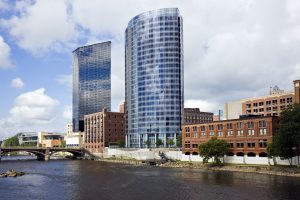
Location: Lansing, Michigan
Duration: 2015-2020

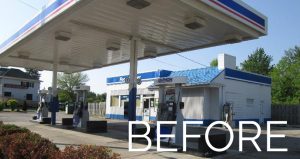
The MSUFCU Cedar Street Project transformed the former gas station site located in Delhi Charter Township into an MSUFCU local branch office. In 2015 Delhi Township identified this site as a priority development site. Triterra provided Brownfield Consulting services for the developer, which secured $1.125 million in Brownfield incentives through multiple local and state sources including a $370,000 Brownfield Redevelopment Grant from the Michigan Department of Environment, Great Lakes and Energy (EGLE) and $755k in Brownfield Tax Increment Financing (TIF) to raze the former obsolete building and address environmental conditions at the site. Overall benefit to the community includes replacement of a former vacant filling station building with a new branch building on a formerly tax-reverted property that generated zero tax revenue for the township.  The improvements to the property are permanent and will significantly increase the taxable value of the property, as well as assist in increasing the property values in the area. The project brings significant investment to this parcel, adds to the economic vitality of the Cedar Street corridor, and adds to the success of the township’s broader development strategy.

Position: Senior Environmental Scientist, Geologist, or Consultant
Type: Full Time
Location: Michigan
Contact: hr@triterra.us

We are currently seeking a Senior Environmental Scientist or Geologist with 8+ years of experience. The primary role of this position will be to manage projects in our Environmental Due Diligence, Investigation & Remediation, or Brownfield service groups. The primary functions of this position would be to oversee all project phases including, work scope development, client communication, implementation, reporting, budget tracking, invoicing, change orders, and account collections. Additional responsibilities would include maintaining a thorough understanding of applicable regulations, understanding and prioritizing projects tasks, developing strong working relationships with clients, training and mentoring staff, providing QA/QC project reviews, preparing and reviewing technical reports, and regular business development activities.

If interested, please send a cover letter and resume to hr@triterra.us

Entry Level Environmental ConsultantPosition: Staff Environmental Scientist or Geologist
Type: Full Time
Location: Michigan
Contact: hr@triterra.us

We are currently seeking a Staff Environmental Scientist or Geologist with 0-3 years of experience. The primary role of this position will be to provide assistance to our Environmental Due Diligence or Investigation & Remediation service groups. Our Environmental Due Diligence group provides consulting services to individuals looking to acquire property or financial institutions that support the purchase of real estate.  Our Investigation & Remediation group provides consulting services in response to ongoing liabilities with Part 201 (Environmental Remediation) and Part 213 (Leaking Underground Storage Tanks) of Public Act 451 as well as hazardous materials assessments (asbestos, lead, and mold). Daily work tasks would include completing field assignments (i.e. advancement of soil borings, collection of soil and groundwater samples, site visits to assess current property conditions, etc.), working with project managers to understand project goals and objectives, data tabulation and interpretation, and technical report writing.

If interested, please send a cover letter and resume to hr@triterra.us

Position: Project Environmental Scientist or Geologist
Type: Full Time
Location: Michigan
Contact: hr@triterra.us

We are currently seeking a Project Environmental Scientist or Geologist with 3-8 years of experience. The primary role of this position will be to manage projects in our Environmental Due Diligence, Investigation & Remediation, or Brownfield service groups. The primary functions of this position would be to oversee all project phases including, work scope development, client communication, implementation, reporting, budget tracking, invoicing, change orders, and account collections. Additional responsibilities would include maintaining a thorough understanding of applicable regulations, understanding and prioritizing projects tasks, developing strong working relationships with clients, training entry-level staff, providing QA/QC project reviews, preparing technical reports, and assisting with business development activities.

If interested, please send a cover letter and resume to hr@triterra.us

Project: Provident Place
Location: Lansing, Michigan
Duration: 2015-2018

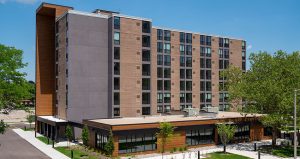
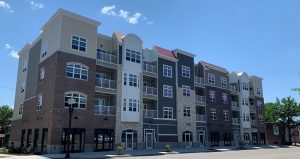
Another exciting project along the Michigan Avenue Corridor connecting Lansing and East Lansing! The Provident Place Redevelopment Project transformed the former gas station site located in the Lansing Eastside Neighborhood into a vibrant mixed-use development.  The 4 story building includes 9,500 square feet of office/retail space and 37 residential units.  Triterra’s role in this project included environmental due diligence services on behalf of the developer to evaluate and understand environmental challenges at the property including the presence of abandoned underground storage tanks, environmental contamination, and asbestos-containing building materials. Triterra conducted an assessment of available economic incentives and implemented several Brownfield incentives including environmental assessment under an EPA Brownfield Assessment Grant, approval of Brownfield tax increment financing (TIF) allowing for local and state tax increment revenue capture, and ultimately the award of $1 million in cleanup funding through the Michigan Department of Environmental Quality (MDEQ) Brownfield Redevelopment Grant and Loan Program. Over $2.1 million in Brownfield Incentives were approved for this vital project located between the state Capital Building and Michigan State University.

Project: Capitol View
Location: Lansing, Michigan
Duration: 2015-2020

This Capitol View redevelopment project brings 96 residential units and 4,430 sq ft of office & retail space to the heart of Downtown Lansing, just north of the State Capitol. Triterra provided Brownfield Consulting Services for the developer, George F. Eyde Family, LLC, and helped secure $4 million in Brownfield incentives through multiple local and state sources, including the Michigan Community Revitalization Program (MCRP) Grant and Loan Program, the Lansing Regional Brownfield Coalition EPA Assessment Grant Program, Brownfield Tax Increment Financing (TIF), and a tax abatement through the Obsolete Property Rehabilitation Act (OPRA). Triterra also conducted a baseline environmental assessment (BEA), hazardous materials surveys, and due care consulting for this project. Formerly the Lansing Housing Commission, the building has been vacant for nearly 15 years and required extensive interior demolition, as well as remediation of mold growth and asbestos-containing materials. Without brownfield tax increment reimbursement, the cost burden related to brownfield conditions would have made the project financially unfeasible.

Project: Bridge Street Lofts
Location: Grand Rapids, Michigan
Duration: 2017-2019

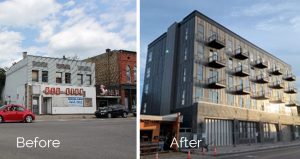
The project involved the redevelopment of the former Red Lion building in the city of Grant Rapids. The newly constructed, 5-story, mixed-use building now includes 9,100 square feet of ground-floor restaurant space and 44 apartments. Through a partnership with Michigan Community Capital, 30% of units are attainable housing available to households earning 80% of the area median income (AMI).

Triterra provided Brownfield Consulting services for the developer, 3MISSION, which secured $2.1 million in Brownfield incentives through multiple local and state sources including a $330,000 Brownfield Redevelopment Grant from the Michigan Department of Environment, Great Lakes and Energy (EGLE) and $1.76mm in Brownfield Tax Increment Financing (TIF) to raze the former obsolete building and address environmental conditions at the site.

Project: 409 on Nine
Location: Ferndale, Michigan
Duration: 2016-2019

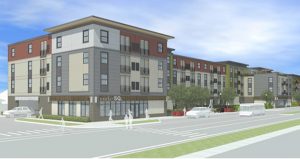
Triterra conducted environmental due diligence and vapor mitigation services on this mixed-use, multi-story development located along the 9 Mile corridor in the immediate vicinity of City Hall in Downtown Ferndale. Triterra also assisted in amending a restrictive covenant, which then allowed for the planned development and secured $2.6 million in Brownfield Tax Increment Financing (TIF). Redevelopment of the site had been previously hindered due to extensive brownfield conditions including, but not limited to, outdated building structures and site features, and the presence of soil, groundwater, and soil gas contamination. The project was only financially feasible through the implementation of financial incentives to address Brownfield conditions.

Completed in 2020, the project increased urban density and existing green space in the corridor, as well as provided additional housing and employment in the downtown area.

Project: Wetland Restoration
Location: Grand Ledge, Michigan
Duration: March 2007 to May 2010

My New Content

Project: Wetland Restoration
Location: Grand Ledge, Michigan
Duration: March 2007 to May 2010

In March 2007, a trucking company lost approximately 3,000 gallons of diesel fuel from an onsite aboveground storage tank (AST). The fuel traveled down an embankment and impacted a 0.3-acre wetland. Triterra personnel immediately developed and emergency response plan to prevent the spread of fuel, remediate the area, and restore the wetland.

The immediate response actions included the removal of approximately 69,000 gallons of diesel fuel/impacted water mixture and approximately 1,000 cubic yards of impacted soil/sediment from the wetland. Once the response actions were completed and confirmed by the Michigan Department of Environmental Quality (MDEQ), wetland restoration activities commenced.  In accordance with an approved After-the-Fact Part 303 Wetland Permit, the wetland area was covered with a layer of high-organic content topsoil and seeded with a Wet Meadow Seed Mix to reestablish itself.  Following a two-year monitoring and maintenance period, the MDEQ approved the wetland restoration efforts.

Project: Proposed Solar Project
Location: Oceana County, Michigan
Duration: May 2018 – Present

Triterra was contracted by a renewable energy company to complete environmental assessment activities for over 1,500 acres of land. The following activities were performed to help determine site suitability and identify and mitigate environmental risk associated with the project:

  • Routine Wetland Delineations
  • EGLE Level 3 Wetland Identification
  • Wetland permitting assistance
  • Phase I Environmental Site Assessments
  • Phase II Subsurface Investigations (as needed)
  • Baseline Environmental Assessments (as needed)
  • Threatened and Endangered Species Assessment
  • Cultural Resources Assessment

Project: Water Quality Investigation
Location: Mid-Michigan
Duration: October 2014 – September 2017

Triterra was retained by a County Drain Commissioner to investigate water quality concerns associated with an early 1900s storm sewer system within an urban drainage system. The drainage area consists of approximately 80% impervious cover containing a large commercial business district and residential neighborhood. Storm water runoff produced within the drainage district is channeled to two outfalls on a local river. The drain was originally constructed in approximately 1902, has not been significantly improved to accommodate for the increased development of the area, and is suspected of discharging impacted storm water into the local river.

The investigation included an environmental assessment of current and historical business operations within the district to determine potential contamination sources, a review of existing environmental data associated with known contamination within the district, field observations, sediment testing within the river and storm water catch basins, and water quality monitoring using grab and flow-paced sampling during wet and dry events. The water quality information will be used to assess the need for improvements to the drainage district and ultimately aid in the system redesign including new best and long-term management practices.

Project: Apartment Complex
Location: East Lansing, Michigan
Description: Indoor Air Quality and Mold Assessment Services

Weather happens, and unfortunately for property owners and their tenants, it can cause any number of headaches. In the case of an Apartment Complex in East Lansing, heavy rains led to the flooding of two garden-level apartments. The property management team quickly responded to mitigate the issue and ensure the health and safety of their tenants. Triterra was brought in to conduct professional indoor-air and mold sampling and assess the conditions therein. Providing rapid turnaround, Triterra analyzed the results of their sampling efforts and provided best-practice methods for remediating the issues identified. Due to the swift response of everyone involved, issues caused by the flooding were quickly rectified and healthy living conditions were restored.

Project: Daycare Center
Location:Charlotte, Michigan
Description: Lead Assessment Services

Triterra offers a variety of lead assessment services, including lead-based paint inspections, lead hazard risk assessments, lead-in-drinking water analysis, and lead-in-soil sampling. With respect to daycare centers, the State of Michigan requires a number of inspections be completed prior to issuing a license to the childcare provider. For daycare centers/homes built prior to 1978, one such required inspection is a Lead Hazard Risk Assessment.

A daycare center located in Charlotte, Michigan requested a lead hazard risk assessment from Triterra in order to acquire their childcare license. This included an assessment of all painted surfaces, dust wipe sampling for lead, assessment of painted playground equipment, and sampling of soil in the outdoor child play areas. After gathering and analyzing the data, Triterra confirmed that no lead hazards were present. With report in-hand, the Daycare Center applied for and received their childcare license and has proudly been serving the Eaton County community.

Project: Multi-story Downtown Building
Location: Lansing, Michigan
Description: Asbestos Inspection Services

When renovations or demolitions are planned for commercial buildings, asbestos inspections are required in order to protect the health and safety of workers, building occupants, and those in the surrounding area of the building. Such was the case for the 15-story Building located in downtown Lansing. Prior to conducting renovations, Triterra inspected this mammoth building, collecting well over 100 samples for asbestos. Samples are collected from floorings, wall finishes, ceiling tile, insulation, and much more. With the analytical results provided by an accredited laboratory, Triterra assembled the data into a clear and concise report identifying asbestos materials and their quantities required for removal. This information provided a clear path forward for the developer in preparation for the renovations to this historical Lansing landmark.

Project: Dry Cleaner
Location: Lansing, Michigan
Duration: October 2017 to Present

Triterra was retained to take over an investigation associated with former on-site dry cleaner operations. Triterra reviewed work completed by a previous consultant and provided the owner with a strategy to move the site towards No Further Action. The plan included additional soil, soil gas, and groundwater sampling. In association with that sampling, vapor mitigation systems were installed in the former dry cleaner building and an adjacent building.  The property was sold during the course the investigation and Triterra was able to use the existing data to provide the new owner with liability protection in a Baseline Environmental Assessment Report. The project is moving towards a No Further Action Report through the use of Restrictive Covenants and Vapor Mitigation Systems to protect site occupants from any potential hazards.

Project: Retirement Community
Location: Saginaw, Michigan
Duration: May 2019 to Present

Triterra was retained to assist with the investigation and remediation plan associated with a retirement community in the Saginaw area. A potential direct contact issue with arsenic was discovered as part of due diligence work completed during the refinancing process. Triterra reviewed soil data from over 100 soil samples collected by a former consultant and collected 30 additional samples to be used as part of a bio-availability assessment and subsequent development of a site-specific criteria for arsenic. Triterra worked closely with the Michigan Department of Environment, Great Lakes, and Energy (EGLE) toxicologists to develop a criterion that was specific to this site use. The resulting Response Activity Plan was approved by both EGLE and MSHDA. The end result was a reduction in remediation costs by over 60% and saved the owners more than $1.5 million. The savings allowed the facility to remain open and continue to operate as a safe living place for the retirement community.

Project: Mixed-use Development
Location: Lansing, Michigan
Duration: July 2016 to Present

Since 2016, Triterra has assisted with the redevelopment of a former golf course in Lansing, Michigan. Triterra collected hundreds of soil samples across the 35.5-acre property in order to identify and isolate areas of potential environmental concern associated with the former pesticide/herbicide use. This work was vital to the feasibility of the project. In addition, Triterra provided asbestos inspections, environmental due diligence, groundwater sampling, and soil management oversight. Once completed, the estimated $256-million-dollar development will consist of student housing, residential apartments, hotels, assisted living facilities, restaurants and more. The project is anticipated to bring jobs and economic growth to the Lansing area and Triterra is proud to be part of it.

Project: Former Gas Station
Location: Port Huron, Michigan
Duration: March 2012 to Present

In 2012, Triterra was retained to assist in returning a former fueling station to a functional commercial property. Since that time Triterra assisted with the removal of three underground storage tanks and associated fuel lines, conducted an asbestos inspection for building demolition, and also completed environmental due diligence work for a new property owner.  In the fall of 2017, Triterra managed the removal of over 1,000 cubic yards of petroleum impacted soil and applied oxygen releasing compounds to the area of concern to assist with the remediation of impacted groundwater. Triterra continues to monitor the property in order to obtain closure under Michigan’s Part 213 regulations.  Construction on the new commercial development is expected to begin in 2021.

Project: Mixed-use Development
Location: Lansing, Michigan
Duration: 2015 to Present

Since 2015, Triterra has assisted with the development of a 122,000 square foot mixed-use building property in Lansing, Michigan. Triterra conducted asbestos abatement oversight, waste characterization sampling, soil removal oversight, soil vapor sampling, and installation of a vapor mitigation system. The project entailed numerous layers of Regulatory Oversight because of State and Federal incentives tied to the development. The end result was No Further Action approval from the Michigan Department of Environment, Great Lakes, and Energy (EGLE) and occupancy approval from the U.S. Department of Housing and Urban Development (HUD).

Project: Multi-Location Gas Station Clients
Location: Lower Peninsula, Michigan
Duration: June 2009 to Present

Triterra has managed environmental issues for several multi-location, retail gas station operations since 2009. Over the last 10 years, our personnel have conducted oversight of response actions on more than 30 petroleum releases, 15 underground storage tank removals, 15 new property transactions, and 10 accepted/pending Closure Reports. Activities completed include soil/groundwater/soil-gas investigations, contaminated soil removal, application of oxygen-releasing compounds, contaminant fate and transport modeling, risk assessment and property restriction evaluations, quarterly/confirmatory groundwater and soil-gas monitoring, environmental due diligence assessments, and regulatory reporting. Work completed for these clients was funded through insurance claims, the Michigan Underground Storage Tank Authority (MUSTA) programs, and/or private funding.

Project: Proposed Commercial Development
Location: Bay City, Michigan
Duration: July 2018 to Present

Triterra was retained by a developer who purchased a commercial property and had approximately 10 days remaining of their 45-day due diligence window to complete environmental due diligence activities. The scope of work included a Phase I ESA, Phase II ESA, soil gas investigation, and removal of an abandoned underground storage tank (UST). The site history included a gasoline filling station, manufacturing operations, and the likely onsite existence of foundry fill. Previous environmental reports had not addressed the abandoned UST, and Triterra rushed to schedule removal before the client would be considered liable for the UST and any associated release.

Within the 10-day timeframe, Triterra completed the scope of work in addition to a geophysical survey, lead-based paint assessment, and asbestos contaminating materials (ACM) assessment. The UST was registered, a confirmed release reported, and claim submitted in order to access the Michigan Underground Storage Tank Authority (MUSTA) fund for assistance with investigation and remediation activities. Triterra continues to work toward site closure and monitor onsite groundwater and soil gas.

Project: Senior Housing Development
Location: Jackson, Michigan
Duration: March 2017 to Present

Triterra completed a Michigan State Housing and Development Authority (MSHDA) Phase I ESA and a Phase II ESA consisting of soil, groundwater, and soil gas sampling. Historical gasoline filling station operations impacted soil and groundwater with various volatile organic compounds (VOCs). Mercury identified in soil also required additional soil gas assessment and was determined not a concern. Based on the contaminants found in the former gasoline filling station corner of the Property, Triterra approached the Michigan Department of Environment, Great Lakes, and Energy (EGLE) for use of funds under the 2017 Indefinite Scope Indefinite Delivery (ISID). EGLE conducted additional petroleum impacted soil exaction activities and UST removal in the public right-of-way and in the area where the former filling station operated. A BEA was prepared for the new owner and a Documentation of Due Care Compliance (DDCC) was submitted and approved by EGLE in 2020.

Project: EPA Brownfield Assessment Grants
Location: Ingham, Eaton, & Clinton Counties, Michigan
Duration: August 2013 to Present

Triterra was selected as one of the region’s environmental consultants to conduct work on three successful Brownfield Assessment Grants from the Environmental Protection Agency (EPA).  These grants were awarded in 2013, 2015, and 2019 for property assessment activities in Clinton, Eaton, and Ingham Counties. To date, Triterra has completed environmental due diligence services on over 45 separate projects under these grants. The property types include historical dry cleaners, auto repair shops, office buildings, industrial facilities, school buildings, and many more. In several cases, additional work, such as asbestos and lead paint inspections, were completed to support the redevelopment of these properties. Upon completion of work under these grants, the properties were ready for construction or be restored to active use.

Project: Apple Blossom Apartments
Location: Iron River, Michigan
Duration: January 2009 to June 2014

The City of Iron River with assistance from Triterra obtained a Brownfield Redevelopment Loan from the Michigan Department of Environmental Quality (MDEQ) in the amount of $735,000 to conduct environmental response actions necessary to safely convert an early 1900s school building into an multi-unit apartment complex. Triterra staff managed the Brownfield Redevelopment Loan on behalf of the City, which included site investigation, storage tank and contaminated soil removal, asbestos abatement, demolition, and lead-based paint abatement activities.

Additionally, Triterra was retained by the Developer to complete Environmental Due Diligence and related services in support of property acquisition and a $680,000 Low-Income Housing Tax Credit (LIHTC). In 2014, the complex was opened and provided 22 affordable housing units to the community.